


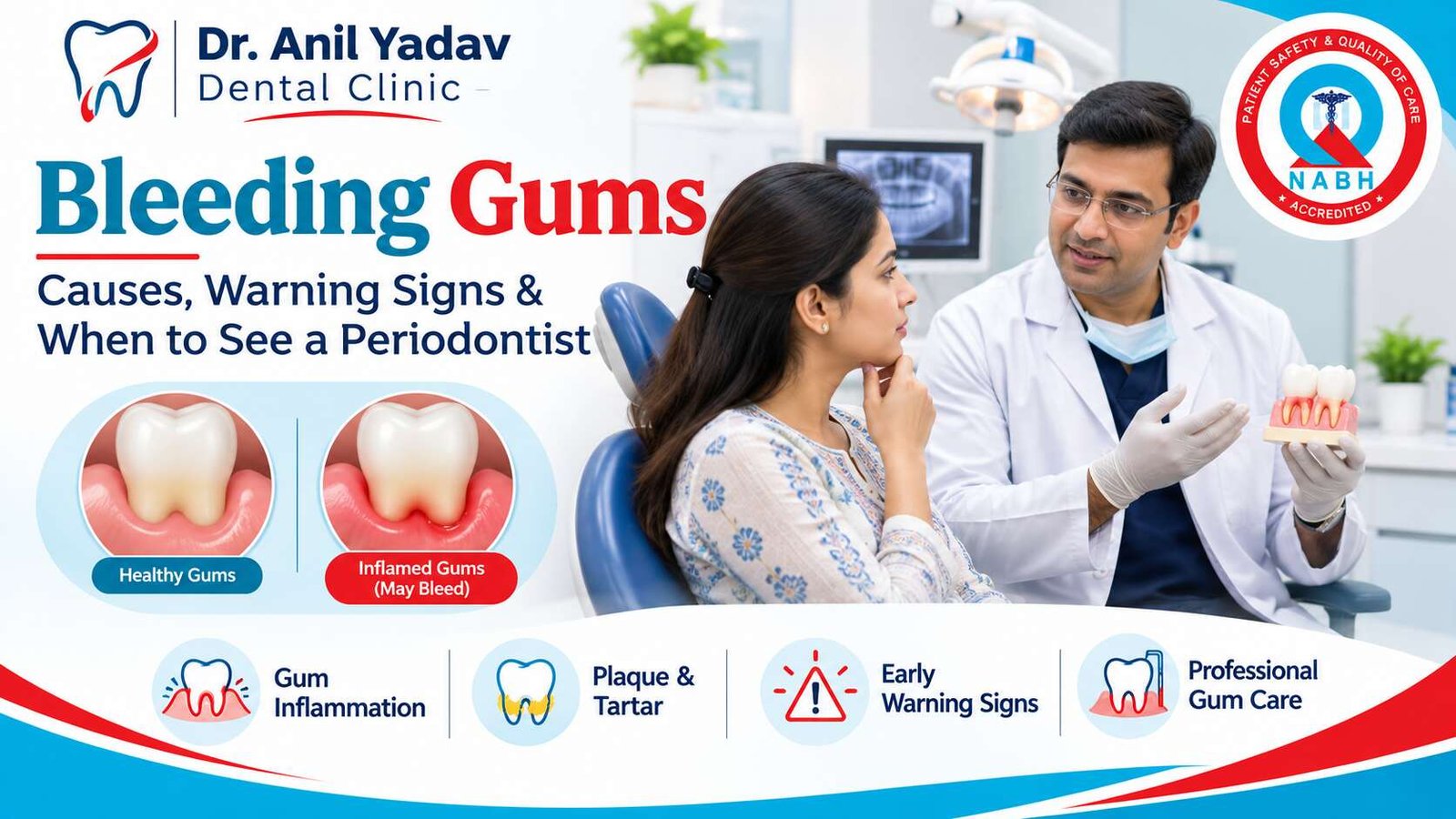
Have you noticed blood while brushing your teeth or flossing? Although occasional gum bleeding may seem harmless, it can sometimes be an early sign of gum inflammation or periodontal disease. Maintaining good oral hygiene and getting timely dental advice are important for protecting your teeth and gums.
At Dr. Anil Yadav Dental Clinic in Gurgaon, patients can explore comprehensive gum treatment and periodontal care to address different oral health concerns. Understanding why gums bleed and recognising the warning signs can help you take the right steps towards healthier gums.
What Does Bleeding Gums Mean?
Healthy gums generally do not bleed during routine brushing or flossing. If you regularly notice blood around your teeth, it may indicate irritation, inflammation or an underlying gum condition.
One common cause is gingivitis, an early stage of gum disease that develops when plaque accumulates along the gumline.
If left untreated, gum disease may progress and affect the tissues and bone supporting your teeth.
The good news is that early gum problems can often be managed with appropriate dental care and improved oral hygiene.
7 Common Causes of Bleeding Gums
1. Gingivitis
Gingivitis is inflammation of the gums, commonly caused by plaque buildup.
Common symptoms include:
- Red or swollen gums.
- Bleeding while brushing.
- Gum tenderness.
- Persistent bad breath.
- Discomfort around the gumline.
Professional dental cleaning and improved oral hygiene can help manage gingivitis.
2. Poor Oral Hygiene
Inadequate brushing and flossing allow plaque to accumulate around the teeth.
Over time, plaque can irritate the gum tissues and cause inflammation.
Brushing twice daily and cleaning between your teeth can help reduce plaque buildup.
3. Tartar Buildup
When plaque is not removed regularly, it can harden into tartar (calculus).
Unlike soft plaque, tartar cannot be effectively removed with regular brushing alone. Professional dental cleaning may be required.
4. Brushing Too Hard
Using excessive pressure or a hard-bristled toothbrush can irritate the gums and cause bleeding.
Consider using:
- A soft-bristled toothbrush.
- Gentle circular brushing movements.
- Fluoride toothpaste.
- Proper brushing techniques recommended by your dentist.
5. Periodontitis
When gingivitis progresses, it may develop into periodontitis, a more advanced form of gum disease.
This condition affects the supporting structures of the teeth and may lead to:
- Persistent gum bleeding.
- Gum recession.
- Deep periodontal pockets.
- Loose teeth.
- Bone loss around teeth.
- Changes in the way teeth fit together when biting.
Early diagnosis and appropriate periodontal treatment are important to help manage the condition.
6. Hormonal Changes
Hormonal fluctuations during pregnancy, puberty and certain other life stages can increase gum sensitivity.
Some individuals may experience swelling, tenderness and bleeding due to an increased inflammatory response to plaque.
Maintaining oral hygiene and attending dental check-ups can help manage these changes.
7. Nutritional Deficiencies and Medical Conditions
Certain nutritional deficiencies, including vitamin C and vitamin K deficiencies, may contribute to bleeding problems.
Medical conditions and medications that affect blood clotting can also influence gum bleeding.
If bleeding is persistent, unexplained or accompanied by other symptoms, consult a healthcare professional.
Warning Signs That You Should Not Ignore
Bleeding gums are not the only indication of gum disease.
Watch out for these additional symptoms:
- Red or swollen gums.
- Persistent bad breath.
- Gum tenderness.
- Receding gums.
- Pus around the teeth or gums.
- Loose teeth.
- Pain while chewing.
- Changes in your bite.
If you notice these symptoms, arrange a dental examination rather than waiting for the condition to worsen.
Gingivitis vs Periodontitis: What Is the Difference?
Understanding the difference between these two conditions is important.
Gingivitis
- Early stage of gum disease.
- Mainly affects the gum tissues.
- Often causes redness, swelling and bleeding.
- Usually reversible with appropriate treatment and oral hygiene.
Periodontitis
- More advanced form of gum disease.
- Affects the supporting tissues and bone around teeth.
- May cause gum recession and loose teeth.
- Can lead to tooth loss if not appropriately managed.
A dental examination helps determine the stage and appropriate treatment.
How Is Gum Disease Diagnosed?
A dentist or periodontist evaluates your gums, teeth and supporting structures to identify the cause of bleeding.
The examination may include:
1. Clinical Gum Examination
The dentist checks for redness, swelling, bleeding and other signs of gum inflammation.
2. Periodontal Pocket Measurement
A specialised periodontal probe may be used to measure the spaces between your teeth and gums.
Deeper pockets may indicate periodontal disease.
3. Dental X-Rays
Dental X-rays may help evaluate the supporting bone around the teeth and identify bone loss associated with advanced gum disease.
4. Medical and Dental History
Your dentist may ask about your medications, medical conditions, smoking habits and oral hygiene routine.
These details help determine possible contributing factors.
What Are the Treatment Options for Bleeding Gums?
Treatment depends on the underlying cause and severity of gum disease.
1. Professional Dental Scaling
Scaling removes plaque and hardened tartar deposits from the tooth surfaces.
It is commonly recommended for managing gingivitis and maintaining gum health.
2. Scaling and Root Planing
For patients with periodontitis, deeper cleaning procedures may be recommended.
Scaling and root planing help remove plaque and tartar from below the gumline and smooth affected root surfaces.
3. Periodontal Treatment
More advanced gum disease may require specialised periodontal procedures.
Depending on the condition, these may include:
- Periodontal flap surgery.
- Gum tissue procedures.
- Bone grafting.
- Regenerative periodontal treatment.
4. Improved Oral Hygiene
Daily oral hygiene plays an important role in maintaining treatment results.
Your dentist may recommend a personalised brushing and interdental cleaning routine.
5. Management of Underlying Conditions
If bleeding is associated with nutritional deficiencies, medication effects or other medical conditions, appropriate medical evaluation may also be required.
8 Tips to Prevent Bleeding Gums
Simple everyday habits can help maintain healthier gums.
1. Brush Twice Daily
Use a soft-bristled toothbrush and fluoride toothpaste.
2. Floss Regularly
Clean between your teeth daily to remove plaque and food particles.
3. Avoid Brushing Too Hard
Use gentle pressure to avoid irritating the gum tissues.
4. Maintain a Balanced Diet
Include nutritious foods, especially fruits and vegetables containing essential vitamins.
5. Avoid Tobacco
Smoking and tobacco use increase the risk of periodontal problems and can interfere with gum healing.
6. Stay Hydrated
Drinking enough water supports saliva production and overall oral health.
7. Get Regular Dental Check-ups
Professional examinations help detect gum problems before they become more advanced.
8. Do Not Ignore Gum Bleeding
If your gums bleed repeatedly, seek professional dental advice instead of relying only on home remedies.
When Should You Visit a Periodontist?
You should consider consulting a periodontist if you experience:
- Repeated bleeding while brushing.
- Persistent gum swelling.
- Gum recession.
- Loose or shifting teeth.
- Persistent bad breath.
- Deep spaces between teeth and gums.
- Signs of advanced gum disease.
A periodontist specialises in diagnosing and treating conditions affecting the gums and supporting structures of the teeth.
Why Choose Dr. Anil Yadav for Gum Treatment in Gurgaon?
Dr. Anil Yadav is an Implantologist and Periodontist (MDS) with specialised training in periodontal surgery and extensive clinical experience.
His areas of expertise include regenerative periodontal surgery, gum treatments, bone grafting and dental implant procedures.
At Dr. Anil Yadav Dental Clinic, patients can explore different dental care options based on their individual oral health requirements.
The clinic offers gum-related treatments such as:
- Gum treatment.
- Periodontal flap surgery.
- Frenectomy.
- Tissue and bone grafting.
- Comprehensive dental care.
Explore the available dental and gum treatment services to understand the treatment options.
Frequently Asked Questions About Bleeding Gums
1. Why do my gums bleed when I brush my teeth?
Bleeding during brushing may indicate gum inflammation, plaque buildup, gingivitis or brushing with excessive pressure. Persistent bleeding should be evaluated by a dentist.
2. Are bleeding gums a sign of gum disease?
They can be an early warning sign of gingivitis or periodontitis. However, other factors, including medications and certain medical conditions, may also contribute.
3. Can bleeding gums heal naturally?
Mild gum inflammation may improve with better oral hygiene, but persistent bleeding requires professional assessment. Hardened tartar needs professional removal.
4. Is scaling necessary for bleeding gums?
If plaque and tartar buildup are contributing to gum inflammation, professional scaling may be recommended after a dental examination.
5. Can vitamin deficiency cause bleeding gums?
Yes. Certain nutritional deficiencies, particularly vitamin C and vitamin K deficiencies, can contribute to bleeding problems.
6. What is the difference between a dentist and a periodontist?
A general dentist provides comprehensive dental care, while a periodontist has specialised training in treating gum disease and supporting structures around the teeth.
7. Can advanced gum disease cause tooth loss?
Yes. Untreated periodontitis can damage the supporting tissues and bone around teeth, potentially resulting in tooth mobility and tooth loss.
Conclusion
Bleeding gums should never be considered a normal part of brushing. They may indicate early gum inflammation or a more advanced periodontal condition that requires professional attention.
Maintaining good oral hygiene, getting regular dental check-ups and seeking timely treatment can help protect your gums and preserve your natural teeth.
If you are experiencing persistent gum bleeding, swelling or gum recession, consult an experienced periodontist for an appropriate evaluation.