



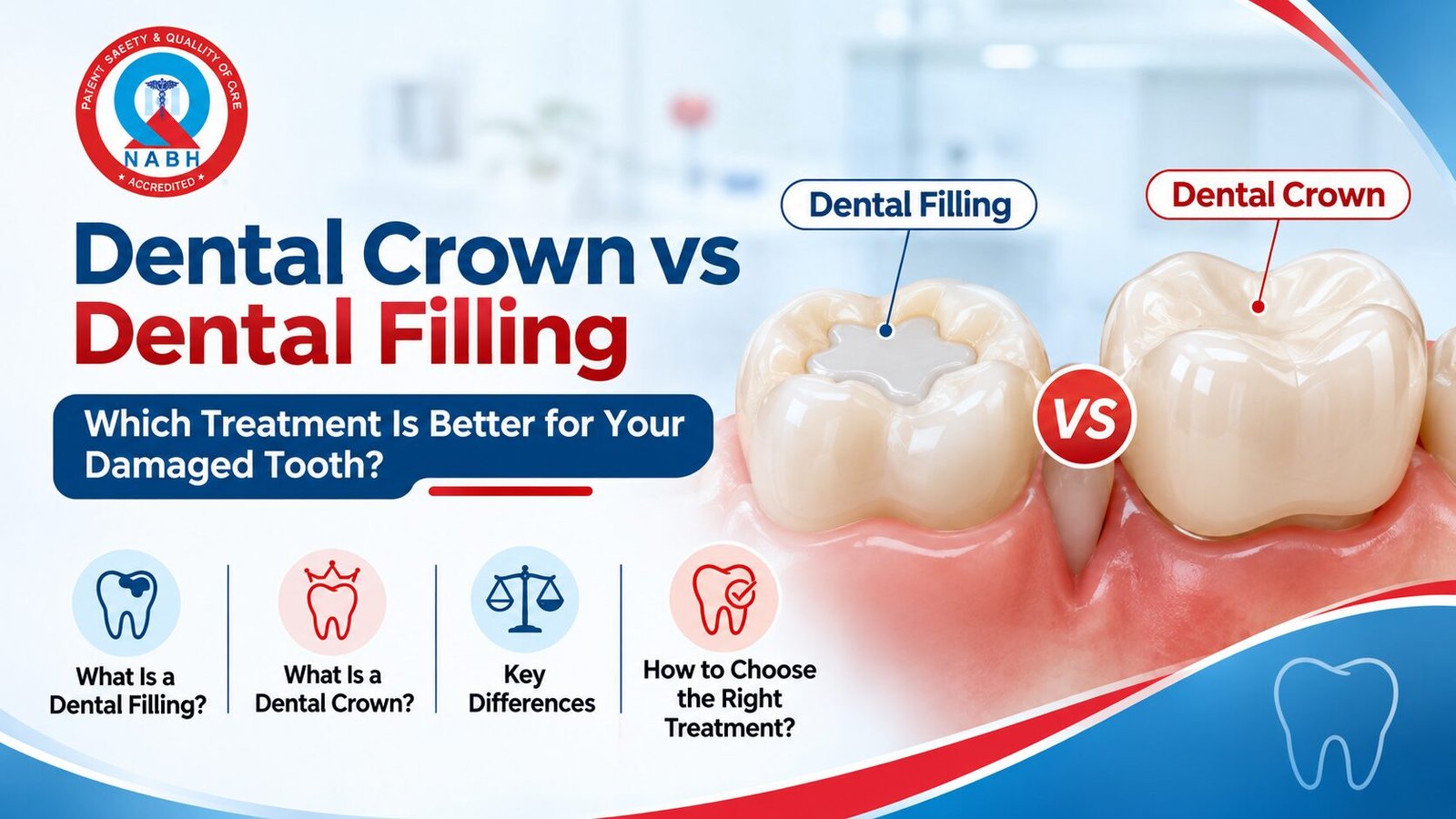
A damaged tooth can affect more than just your smile. Whether you have a small cavity, a chipped tooth, or extensive tooth damage, choosing the right dental treatment is important for protecting your natural teeth and maintaining good oral health.
Two commonly recommended treatments for repairing damaged teeth are dental fillings and dental crowns. Both help restore the function and appearance of teeth, but they serve different purposes.
Many patients visiting a dentist wonder: Should I get a dental filling or a dental crown? Is a crown necessary after a root canal? Which option is better for a broken or weakened tooth?
The answer depends on the amount of tooth structure remaining, the extent of damage, and the overall condition of the tooth.
In this guide, we explain the difference between dental crowns and fillings, their benefits, procedures, and how a dentist determines the most suitable treatment.
What Is a Dental Filling?
A dental filling is a restorative treatment used to repair a tooth affected by decay or minor damage.
When bacteria cause tooth decay, a cavity may develop in the tooth. During treatment, the dentist removes the decayed portion and fills the resulting space with a suitable dental material.
The main purpose of a dental filling is to restore the tooth’s shape, function, and structural integrity while preserving as much healthy natural tooth structure as possible.
Common Types of Dental Fillings
1. Composite Resin Fillings
Composite fillings are tooth-coloured materials designed to blend with the natural appearance of teeth. They are commonly used for visible teeth and suitable cavities.
2. Glass Ionomer Fillings
Glass ionomer materials can release fluoride and may be used in selected restorative situations, depending on the location and condition of the tooth.
3. Amalgam Fillings
Amalgam is a traditional silver-coloured restorative material that has been used for many years, particularly in back teeth.
The choice of filling material depends on the tooth’s location, the size of the cavity, bite forces, and clinical requirements.
What Is a Dental Crown?
A dental crown is a custom-made cap that covers the visible portion of a damaged or weakened tooth.
Unlike a filling, which repairs a specific area, a crown covers the tooth to help restore its shape, strength, and function.
Dental crowns may be recommended when a tooth has significant structural damage and requires additional protection.
Common Types of Dental Crowns
1. Porcelain Crowns
Porcelain crowns offer a natural-looking appearance and may be suitable for visible teeth.
2. Zirconia Crowns
Zirconia is a strong ceramic material that may be used for both front and back teeth, depending on the clinical situation.
3. Porcelain-Fused-to-Metal Crowns
These crowns combine a metal framework with a porcelain outer layer.
4. Metal Crowns
Metal crowns are durable and may be used in selected cases, particularly where appearance is less important.
The dentist recommends a crown material after considering aesthetics, bite forces, available tooth structure, and the patient’s requirements.
Dental Crown vs Dental Filling: Key Differences
Although both treatments restore damaged teeth, they differ in their purpose and application.
| Feature | Dental Filling | Dental Crown |
|---|---|---|
| Main purpose | Repairs cavities and smaller areas of damage | Covers and protects a weakened tooth |
| Coverage | Restores the affected area | Covers the visible tooth |
| Tooth preparation | Usually limited to the damaged area | Requires shaping the tooth |
| Common use | Small to moderate cavities | Extensive damage or selected post-RCT teeth |
| Material | Composite, amalgam, glass ionomer | Ceramic, zirconia, metal and other materials |
| Treatment process | Often completed in one visit | May require multiple visits or a digital workflow |
| Main benefit | Preserves more natural tooth structure | Provides coverage and protection |
Neither treatment is universally better. The right option depends on the individual tooth and its clinical condition.
When Do You Need a Dental Filling?
A dental filling may be suitable when tooth decay or damage is limited and enough healthy tooth structure remains.
Your dentist may recommend a filling if you have:
- A small or moderate cavity.
- Minor tooth damage.
- A chipped area that can be restored directly.
- An old filling that requires replacement.
- Tooth decay that has not caused extensive structural damage.
Early treatment of cavities can help prevent further deterioration.
However, the dentist must assess the depth and extent of decay before deciding whether a filling is sufficient.
When Do You Need a Dental Crown?
A dental crown may be recommended when a tooth has lost a significant amount of its natural structure.
Common situations include:
1. Severely Damaged Teeth
A tooth with extensive decay or structural damage may require a crown to restore its shape and function.
2. Cracked or Broken Teeth
Some cracked or fractured teeth may benefit from crown coverage, depending on the location and severity of the crack.
3. After Root Canal Treatment
Certain teeth, particularly back teeth with substantial structural loss, may require a crown after root canal treatment to provide additional protection.
However, not every root canal-treated tooth automatically needs a crown. The decision depends on the remaining tooth structure and clinical findings.
4. Large Existing Fillings
When a tooth has a large existing filling and limited healthy structure remaining, a crown may be considered to help protect it.
5. Restoring Tooth Shape
Crowns can also be used to restore the shape and appearance of certain damaged or severely worn teeth.
Dental Crown Procedure: What Should You Expect?
The dental crown procedure generally involves several steps.
Step 1: Dental Examination
The dentist examines the damaged tooth and may recommend dental X-rays or other investigations to assess its condition.
Step 2: Tooth Preparation
The affected tooth is carefully shaped to create space for the crown.
Any decay or damaged structure requiring treatment is addressed as part of the procedure.
Step 3: Digital Scanning or Impression
The dentist records the shape of the prepared tooth using a digital scanner or traditional impression technique.
This information helps create a custom-fitted crown.
Step 4: Temporary Crown
Depending on the treatment workflow, a temporary crown may be placed while the permanent restoration is prepared.
Step 5: Final Crown Placement
The dentist checks the fit, appearance, and bite before fixing the permanent crown in place.
The exact number of appointments depends on the materials, technology, and complexity of the case.
Can a Dental Filling Turn Into a Dental Crown Later?
Yes. A tooth that initially receives a filling may require a crown later if additional tooth structure becomes damaged.
For example, a large cavity may weaken the remaining tooth structure. Over time, the tooth may develop cracks or suffer further damage.
In such situations, the dentist may recommend a crown to provide additional coverage.
This is one reason why regular dental examinations and timely treatment are important.
How to Decide Between a Dental Crown and Dental Filling?
Choosing between these treatments requires a proper clinical examination.
Your dentist may consider several factors:
Extent of Tooth Damage: Small cavities may be suitable for fillings, while extensive damage may require a crown.
Remaining Natural Tooth Structure: The amount of healthy tooth structure available plays an important role in treatment planning.
Location of the Tooth: Back teeth experience greater chewing forces, which can influence the type of restoration recommended.
Previous Dental Treatment: Teeth that have undergone root canal treatment may require additional structural protection in selected cases.
Bite and Grinding Habits: Teeth exposed to heavy bite forces or grinding may require a different restorative approach.
Aesthetic Requirements: The choice of restorative material may depend on whether the tooth is visible while smiling.
Your dentist will explain the benefits, limitations, and alternatives before recommending treatment.
How Can You Maintain Your Dental Crown or Filling?
Proper oral hygiene helps protect both natural teeth and dental restorations.
Here are some useful habits:
- Brush twice daily using fluoride toothpaste.
- Clean between your teeth regularly using floss or interdental brushes.
- Avoid chewing very hard objects such as ice or hard non-food items.
- Limit frequent consumption of sugary foods and drinks.
- Visit your dentist for regular examinations.
- Inform your dentist if you notice a loose crown, chipped filling, or discomfort.
- If you grind your teeth, ask your dentist whether a night guard may be appropriate.
Remember that dental crowns and fillings are not permanent for life. They may require repair or replacement depending on their condition.
Why Choose Dr. Anil Yadav Dental Clinic in Gurgaon?
Selecting an experienced dental team and an appropriate treatment approach is important for restoring damaged teeth.
Dr. Anil Yadav Dental Clinic in Gurgaon offers a range of dental services, including general dentistry, root canal treatment, cosmetic dentistry, dental implants, veneers, orthodontics, and oral surgery.
The clinic also highlights modern dental technology and diagnostic facilities, including digital X-rays, CBCT imaging, dental microscopes, and intraoral scanning.
These technologies can support dental examination, treatment planning, and restorative procedures where clinically indicated.
The clinic focuses on personalised treatment planning, patient comfort, and maintaining appropriate hygiene and safety standards.
Whether you need an assessment for a damaged tooth, a dental filling, or a dental crown, a professional consultation can help determine the right treatment for your needs.
Book Your Dental Consultation Today
Dr. Anil Yadav Dental Clinic
Gurgaon, Haryana
Phone: +91-9212345041
Website: https://dranilyadavdentalclinic.com/
Frequently Asked Questions (FAQs)
1. Is a dental crown better than a filling?
Neither is universally better. A filling is generally suitable for smaller cavities, while a crown may be recommended for teeth with extensive damage or weakened structure.
2. How do I know if I need a crown instead of a filling?
Your dentist will assess the size of the cavity, remaining tooth structure, location of the tooth, and extent of damage. Dental X-rays may also be required.
3. Can a dental crown prevent a tooth from breaking?
A crown covers and supports a weakened tooth, helping protect it from certain types of damage. However, it cannot guarantee that the tooth will never crack or break.
4. Do all root canal-treated teeth need crowns?
No. The need for a crown depends on the amount of remaining tooth structure, the tooth’s location, and the type of damage. Your dentist will recommend the appropriate restoration.
5. How long do dental crowns and fillings last?
Their lifespan varies depending on the material, oral hygiene, bite forces, and regular dental care. Both may eventually require repair or replacement.
6. Can I get a tooth-coloured dental filling?
Yes. Composite resin fillings are tooth-coloured and can be matched to the natural shade of your teeth.
7. Is getting a dental crown painful?
The procedure is generally performed using local anaesthesia to keep the patient comfortable. Some temporary sensitivity or mild discomfort may occur afterward.
8. Where can I get dental crown treatment in Gurgaon?
You can visit Dr. Anil Yadav Dental Clinic in Gurgaon for a dental examination and personalised treatment recommendations.
Conclusion
Dental crowns and fillings are both important restorative treatments, but they serve different purposes. While fillings are commonly used to repair smaller cavities, crowns provide coverage and support for teeth with more extensive damage.
Choosing the right treatment at the right time can help preserve natural tooth structure, restore chewing function, and maintain a healthy smile.
If you are experiencing tooth sensitivity, pain, visible cavities, or a broken tooth, do not delay a dental examination.
Visit Dr. Anil Yadav Dental Clinic in Gurgaon to discuss your dental concerns and explore suitable restorative treatment options.