


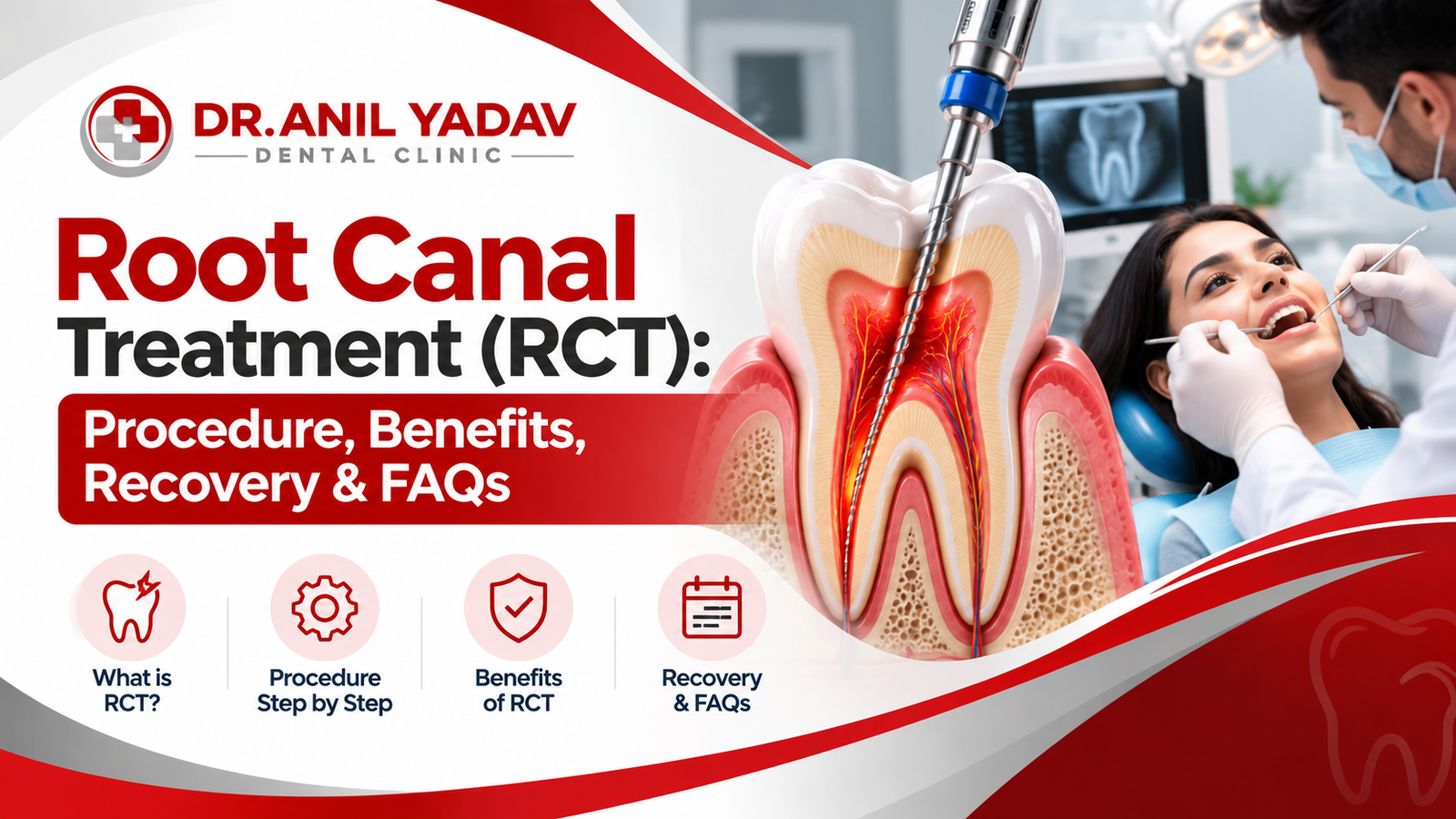
A severe toothache, prolonged sensitivity, deep dental decay, or a damaged tooth can sometimes indicate a problem inside the tooth. When the pulp—the soft tissue containing nerves and blood vessels—becomes inflamed or infected, Root Canal Treatment (RCT) may be recommended to remove the infection and save the natural tooth.
At Dr. Anil Yadav Dental Clinic, Root Canal Treatment is performed with a focus on precision and tooth preservation. The clinic uses global dental microscopes for root canal procedures, helping the dental team work with enhanced visualization of the intricate root canal system.
What Is Root Canal Treatment?
Root Canal Treatment, commonly called RCT, is a dental procedure used to treat a tooth in which the pulp has become inflamed or infected.
During RCT, the infected or damaged pulp is removed. The inside of the tooth is then carefully cleaned, disinfected, shaped, and sealed. Afterward, the tooth is usually restored with a filling or dental crown, depending on how much tooth structure remains.
The primary objective is to save the natural tooth and restore its function rather than removing it.
Why Is Root Canal Treatment Needed?
A root canal may be required when the pulp inside the tooth is damaged because of:
- Deep tooth decay
- A cracked or fractured tooth
- Dental trauma or injury
- Repeated dental procedures on the same tooth
- Problems associated with an existing restoration
- Infection inside the tooth
If an infected pulp is left untreated, the infection may spread to the tissues around the tooth and potentially result in an abscess.
What Are the Symptoms That May Indicate You Need an RCT?
Not every tooth requiring RCT causes the same symptoms. Common signs may include:
- Persistent toothache
- Severe pain while chewing or biting
- Prolonged sensitivity to hot or cold
- Swelling or tenderness around the tooth
- A pimple or swelling on the gums
- A cracked or chipped tooth
- Deep dental decay
- Darkening or discoloration of the tooth
Sometimes, a tooth with an infection may have few noticeable symptoms. A dental examination and appropriate imaging are therefore important for diagnosis.
How Is Root Canal Treatment Performed?
Although the exact procedure varies depending on the tooth and the extent of infection, RCT generally involves the following steps:
1. Dental Examination
The dentist examines the affected tooth and evaluates your symptoms. Dental X-rays or other imaging may be used to understand the condition of the tooth and surrounding structures.
2. Local Anesthesia
Local anesthesia is used to numb the area around the affected tooth and help keep the procedure comfortable.
3. Accessing the Tooth
A small opening is made in the tooth to reach the infected or inflamed pulp and root canals.
4. Cleaning and Disinfecting
The damaged pulp is removed, and the root canals are carefully cleaned, shaped, and disinfected.
5. Sealing the Root Canals
After cleaning, the canals are filled and sealed to help prevent bacteria from entering the treated space again. A material called gutta-percha is commonly used for sealing.
6. Restoring the Tooth
After RCT, the tooth may require a permanent filling or a dental crown to restore its strength and function. The appropriate restoration depends on the amount of remaining tooth structure and the tooth’s location.
Is Root Canal Treatment Painful?
One of the biggest concerns patients have about RCT is pain. Modern root canal treatment is performed using local anesthesia and contemporary techniques, making the procedure generally comfortable for most patients.
Some tenderness or mild discomfort can occur for a few days after treatment, particularly if there was infection or inflammation before the procedure. Your dentist can advise you on appropriate aftercare and pain management.
Benefits of Root Canal Treatment
Choosing RCT when the tooth can be successfully treated can provide several benefits:
Saves the Natural Tooth
The main advantage is that RCT can allow a damaged or infected tooth to remain in place.
Restores Chewing Function
After appropriate restoration, the treated tooth can continue to function for biting and chewing.
Helps Relieve Dental Pain
Treating the source of inflammation or infection can help resolve pain associated with the affected pulp.
Maintains Your Natural Smile
Keeping your natural tooth can help maintain your smile and the normal relationship between surrounding teeth.
May Avoid Tooth Extraction
When a tooth can be predictably saved, RCT may eliminate the immediate need for extraction and subsequent tooth replacement.
Why Choose Microscope-Assisted Root Canal Treatment?
Root canals can be extremely small and complex. Magnification can help a dentist visualize details that may be difficult to see with the naked eye.
Dr. Anil Yadav Dental Clinic uses global dental microscopes for root canal treatment, with the aim of providing precise treatment of the root canal system.
Microscope-assisted dentistry may be particularly useful when treating complex anatomy, locating difficult canals, or managing challenging cases. The suitability of microscope-assisted treatment depends on the individual tooth and clinical condition.
How Long Does a Root Canal Take?
The treatment time depends on factors such as:
- Which tooth is being treated
- Number and complexity of root canals
- Extent of infection
- Presence of previous dental treatment
- Need for additional procedures
- Type of final restoration required
Some root canal treatments can be completed in one or two appointments, while more complex cases may require additional visits.
What Should You Do After RCT?
After your root canal treatment:
- Follow your dentist’s instructions carefully.
- Avoid chewing hard foods on the treated tooth until your permanent restoration is placed, if advised.
- Maintain regular brushing and interdental cleaning.
- Attend the recommended follow-up appointment.
- Get the recommended crown or permanent restoration when advised.
- Contact your dentist if you experience severe or persistent pain, swelling, or other unusual symptoms.
Proper restoration and ongoing oral hygiene are important for protecting the treated tooth.
Can a Root Canal Treated Tooth Last a Long Time?
A properly treated and restored tooth can continue to function for many years. The long-term outcome depends on factors such as the quality of treatment, the amount of remaining tooth structure, the final restoration, oral hygiene, bite forces, and regular dental care.
With appropriate care, many root canal-treated teeth can remain functional for a very long time.
Root Canal Treatment at Dr. Anil Yadav Dental Clinic
If you are experiencing persistent tooth pain, sensitivity, swelling, or discomfort while chewing, do not ignore the symptoms. Early dental evaluation can help determine whether the tooth can be treated and preserved.
Dr. Anil Yadav Dental Clinic provides Root Canal Treatment with an emphasis on precision, advanced technology, and natural tooth preservation. The clinic specifically highlights the use of global dental microscopes for precise root canal treatment.
The clinic also provides a comprehensive range of dental services, including dental implants, cosmetic dentistry, orthodontics, veneers, pediatric dentistry, smile designing, oral surgery, and general dental care.
Frequently Asked Questions About Root Canal Treatment
1. What is RCT in dentistry?
RCT stands for Root Canal Treatment. It is a procedure used to remove infected or inflamed pulp from inside a tooth, clean and disinfect the root canals, and seal them so the natural tooth can be preserved.
2. Is RCT better than tooth extraction?
When a natural tooth can be predictably saved, root canal treatment can preserve the tooth and its function. Extraction may be recommended when the tooth cannot be adequately restored or saved. Your dentist can explain the available options after examination.
3. Does RCT remove the tooth nerve?
Yes. During RCT, the infected or inflamed pulp containing nerves and blood vessels is removed. The tooth can continue to function because the surrounding tissues support it.
4. How many appointments are required for RCT?
It depends on the tooth and the complexity of the case. Some treatments may be completed in one or two appointments, while complex cases may require additional visits.
5. Will I need a crown after RCT?
A crown may be recommended depending on the tooth and the amount of remaining tooth structure. Your dentist will determine the appropriate restoration after evaluating the treated tooth.
6. Can RCT be done on a badly decayed tooth?
It may be possible if enough healthy tooth structure remains to restore the tooth. However, if the tooth cannot be predictably restored, extraction or another treatment may be considered.
7. When should I see a dentist for tooth pain?
You should arrange a dental examination if tooth pain persists, especially if it is accompanied by swelling, prolonged hot/cold sensitivity, pain while biting, or other unusual symptoms.
Conclusion
Root Canal Treatment is a tooth-saving procedure that can treat infection or inflammation inside a tooth while allowing you to retain your natural tooth. With modern anesthesia, advanced techniques, and appropriate restoration, RCT can be performed comfortably and can help restore normal dental function.
If you have persistent tooth pain, sensitivity, swelling, or a damaged tooth, consult a dentist rather than delaying treatment. Dr. Anil Yadav Dental Clinic offers microscope-assisted root canal treatment focused on precise treatment and preservation of natural teeth.